梅西耶33号:三角星系
(原标题: Messier 33: The Triangulum Galaxy)
2026-09-18
浏览次数: 1497
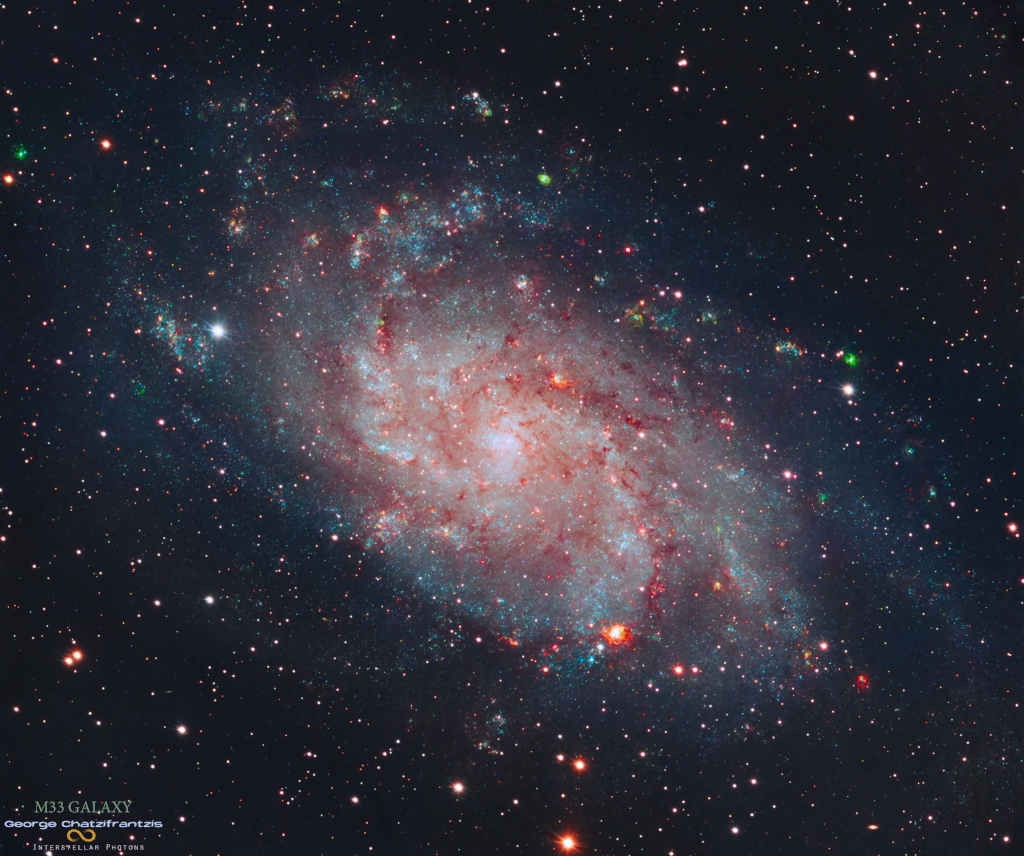
北边的小三角座拥有这个壮观的正面螺旋星系,梅西耶33。它的流行名称包括风车星系或三角星系。M33直径超过5万光年,是本星系群中第三大星系,仅次于仙女座星系(M31)和我们的银河系。M33距离银河系大约300万光年,它本身被认为是仙女座星系的一颗卫星,这两个星系的天文学家可能会看到彼此巨大的螺旋星系的壮观景象。从银河系的角度来看,这张清晰的望远镜图像显示了M33星系松散缠绕的旋臂上的蓝色星团和粉红色的恒星形成区域。事实上,洞穴状的ngc604是最明亮的恒星形成区,在离星系中心5点钟方向的位置。和M31一样,M33的变星数量也得到了很好的测量,这有助于使这个附近的螺旋星系成为建立宇宙距离尺度的宇宙尺度。APOD的主要NASA网站正在迁移:从APOD . NASA .gov到science.nasa.gov/apod
查看原文解释
The small, northern constellation Triangulum harbors this magnificent face-on spiral galaxy, Messier 33. Its popular names include the Pinwheel Galaxy or just the Triangulum Galaxy. M33 is over 50,000 light-years in diameter, third largest in the Local Group of galaxies after the Andromeda Galaxy (M31), and our own Milky Way. About 3 million light-years from the Milky Way, M33 is itself thought to be a satellite of the Andromeda Galaxy and astronomers in these two galaxies would likely have spectacular views of each other's grand spiral star systems. As for the view from the Milky Way, this sharp telescopic image shows off M33's blue star clusters and pinkish star forming regions along the galaxy's loosely wound spiral arms. In fact, the cavernous NGC 604 is the brightest star forming region, seen here at about the 5 o'clock position from the galaxy center. Like M31, M33's population of well-measured variable stars have helped make this nearby spiral a cosmic yardstick for establishing the distance scale of the Universe. APOD's main NASA site is moving: From apod.nasa.gov to science.nasa.gov/apod
© George Chatzifrantzis