nha Uhane Māhoe Huki pgi ke Ola
(原标题: Nā ʻUhane Māhoe Huki Pū i ke Ola)
2026-09-04
浏览次数: 1633
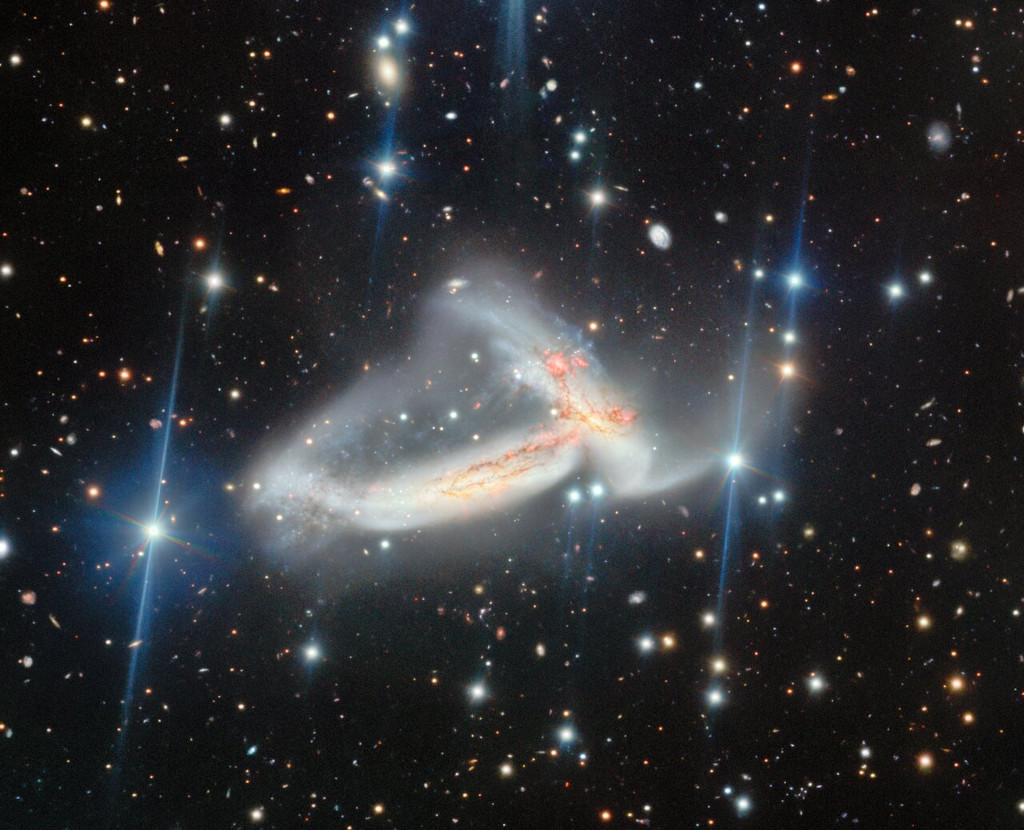
nahu Uhane Māhoe Huki pki ke Ola,是这张被相互引力包围的螺旋星系的夏威夷名字。在距离飞马座大约2亿光年的地方,夏威夷茂纳克亚的8.1米双子北望远镜捕捉到了壮观的银河系尺度的合并。这对被称为NGC 7253和Arp 278的星系被双子天文台和夏威夷大学联合项目Hōkūlani实习项目的高中生选为研究目标,并给了一个夏威夷名字。这个名字翻译过来就是“孪生灵魂齐心协力创造生命”。这在文化上和天文学上都是合适的,因为星系碰撞会引发宇宙大漩涡,从星系储存库中形成生命的基本组成部分。这些合并的星系是在飞马座的一个区域被发现的,这个区域被确定为夏威夷导航星座Ka Lupe o Kawelo。APOD的主要NASA网站正在迁移:从APOD . NASA .gov到science.nasa.gov/apod
查看原文解释
Nā ʻUhane Māhoe Huki Pū i ke Ola, is the Hawaiian name given to this image of a pair of spiral galaxies locked in a mutual gravitational embrace. Some 200 million light-years distant toward the high flying constellation Pegasus their spectacular, galactic scale merger is captured in sharp detail in the image from the 8.1 meter Gemini North telescope on Maunakea, Hawai‘i. The galaxy pair, known as NGC 7253 and Arp 278, was chosen as a target, researched, and given a Hawaiian name by high school students in the joint Gemini Observatory and University of Hawaiʻi Project Hōkūlani internship program. The name translates to "The Twin Spirits Pulling Together Creating Life". That's both culturally and astronomically appropriate for galaxy collisions that trigger a cosmic maelstrom of star formation from galactic reservoirs of elemental building blocks of life. These merging galaxies are found within a region of Pegasus identified as the Hawaiian navigational constellation Ka Lupe o Kawelo. APOD's main NASA site is moving: From apod.nasa.gov to science.nasa.gov/apod