《日蚀与鹳
(原标题: The Eclipse and the Stork)
2026-09-03
浏览次数: 1645
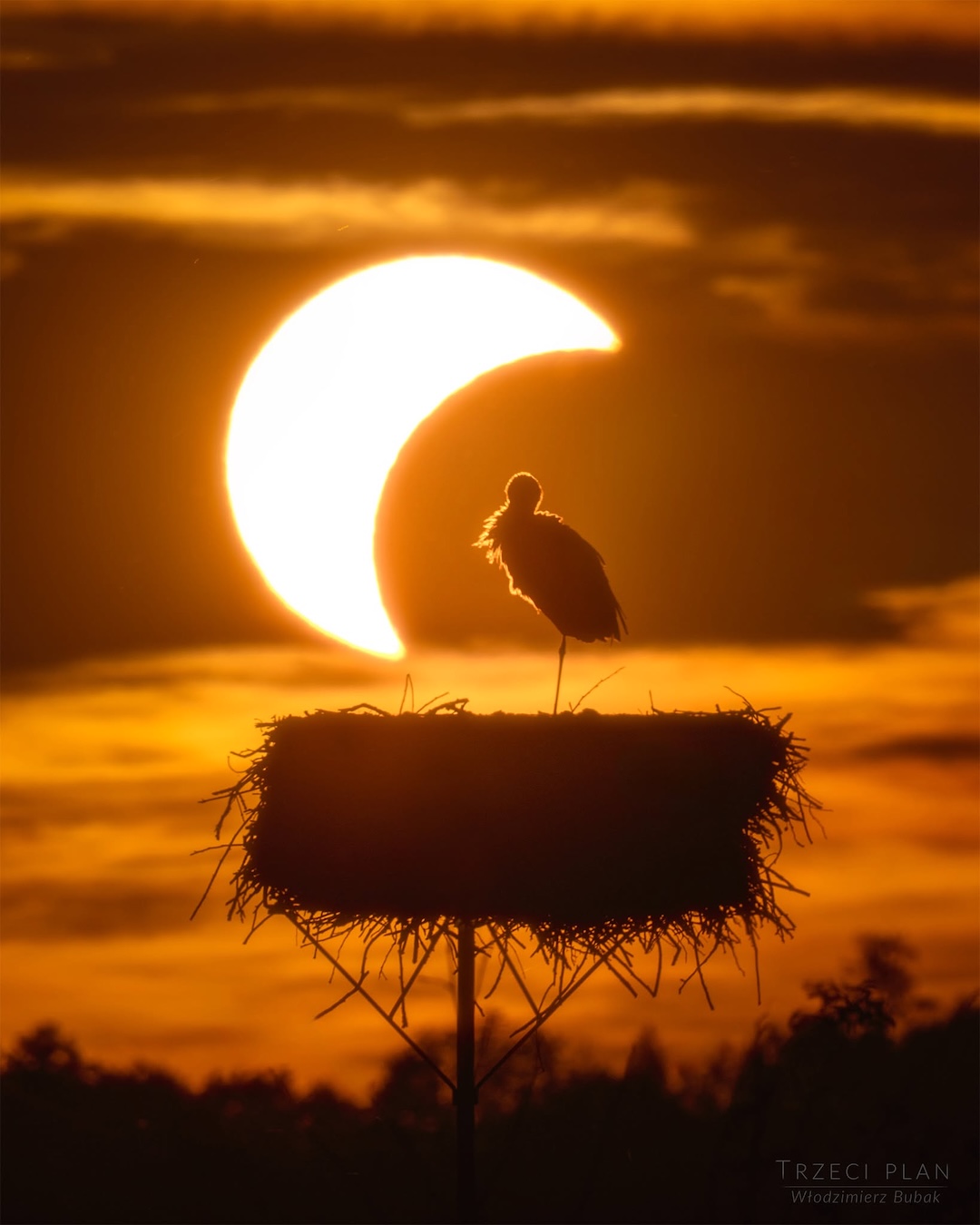
动物对日全食有什么反应?这张特色图片显示,在最近的日全食的部分阶段,一只鹳栖息在波兰的鸟巢上。如果你足够幸运,能在安静、接近大自然的地方经历一次日全食,你可能会注意到白天动物不寻常的行为。在全食期间,你可能会听到蟋蟀和青蛙的声音,看到萤火虫。在黑暗中,大多数鸟都很安静。鸭子和其他水禽认为是时候睡觉了,它们准备单腿睡觉,头转过来,喙塞进它们的后毛里(它们并不是真的把头塞在一只翅膀下睡觉的)。当太阳在日全食结束时返回时,鸣禽用黎明的歌声迎接新的“早晨”。蟋蟀和青蛙又安静下来了。动物和人类恢复了他们的生活,只是被太阳和月亮的偶然对齐短暂地打扰了一下。APOD的主要NASA网站正在迁移:从APOD . NASA .gov到science.nasa.gov/apod
查看原文解释
How do animals react to a total solar eclipse? The featured image shows a stork roosting on her nest in Poland at a partial phase of the recent total solar eclipse. If you are lucky enough to experience a total eclipse somewhere quiet and close to nature, you may be able to notice unusual daytime animal behaviors. During totality, you may hear nighttime sounds like crickets and frogs and see fireflies. In the dark, most birds are quiet. Thinking that it is time to go to bed, ducks and other waterfowl prepare to sleep on one leg, with their heads turned around and their beaks tucked into their back feathers (they don't really sleep with their heads tucked under one wing). When sunlight returns at the end of totality, songbirds greet the new "morning" with their dawn songs. The crickets and frogs go quiet again. Animals and people resume their lives, only briefly disturbed by the chance alignment of our Sun and Moon. APOD's main NASA site is moving : From apod.nasa.gov to science.nasa.gov/apod
© Włodzimierz Bubak Text: Cecilia Chirenti (NASA GSFC, UMCP, CRESST II)