天空在帕拉纳尔上空转动
(原标题: The Sky Turns Above Paranal)
2026-08-28
浏览次数: 1652
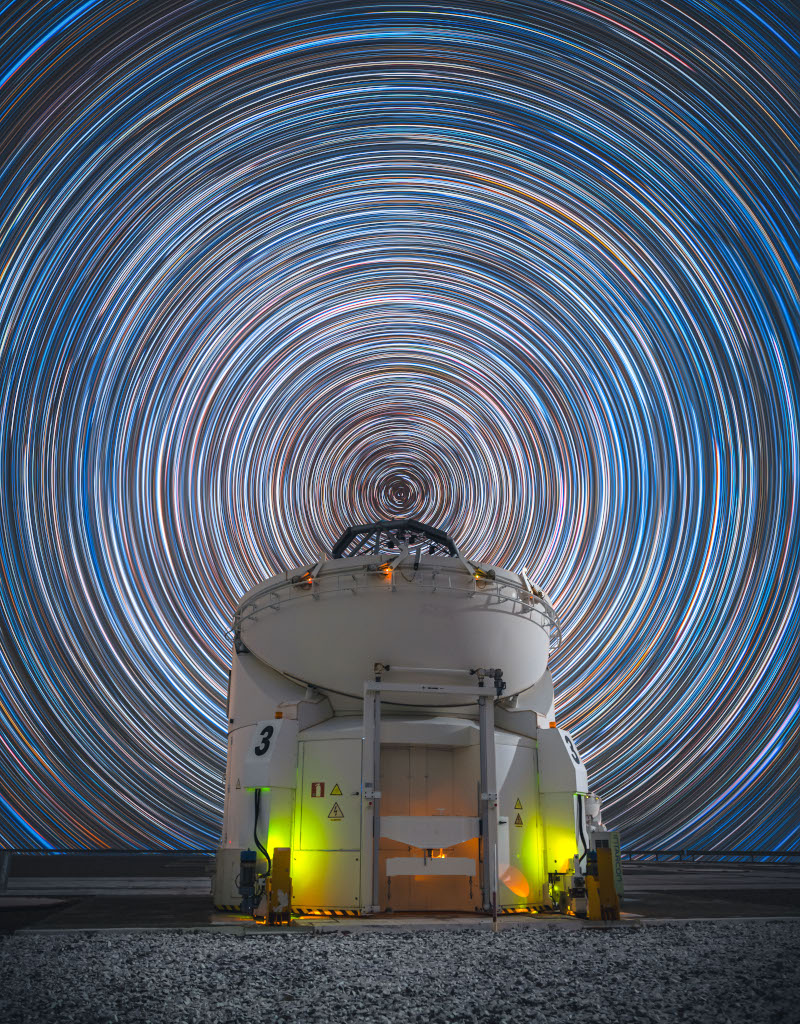
在ESO位于智利的帕拉纳天文台的纬度上,大约南纬25度,地球的自转使地球表面以每小时超过1500公里的速度向东移动。虽然这比海平面上的声速快,但这种运动是难以察觉的。尽管如此,这种运动还是可以通过拍摄星迹来揭示夜空的明显旋转。这张星迹图像是用固定在三脚架上的相机跟踪星迹弧线,由300个连续25秒曝光的数字叠加而成的。优美的弧线是同心的,以南天极为中心,南天极是地球自转轴向太空的延伸。天文台正在运行的1.8米辅助望远镜之一at3出现在南天极下方,在这幅精心设计的旋转行星的前景中,它被微弱的光线照亮。不断增长的画廊:2026年8月28日的月食APOD的主要NASA网站正在移动:从APOD . NASA .gov到science.nasa.gov/apod
查看原文解释
At the latitude of ESO's Paranal Observatory in Chile, about 25 degrees south, Earth's rotation moves the planet's surface eastward at over 1,500 kilometers per hour. And while that's faster than the speed of sound at sea level, the motion is imperceptible. Still, that motion can be revealed in the apparent rotation of the night sky by photographing star trails. This star trail image was composed from a digital stack of 300 consecutive 25-second exposures made with a camera fixed to a tripod to trace the star trail arcs. The graceful arcs are concentric and centered at the south celestial pole, the southern hemisphere extension of Earth's axis of rotation into space. One of the observatory's operating 1.8 meter auxiliary telescopes, AT 3, appears beneath the south celestial pole, faintly illuminated in the foreground of this well-planned scene from a rotating planet. Growing Gallery: Lunar Eclipse of 2026 August 28 APOD's main NASA site is moving: From apod.nasa.gov to science.nasa.gov/apod
© Osvaldo Castillo