主要是英仙座
(原标题: Mostly Perseids)
2026-08-22
浏览次数: 1671
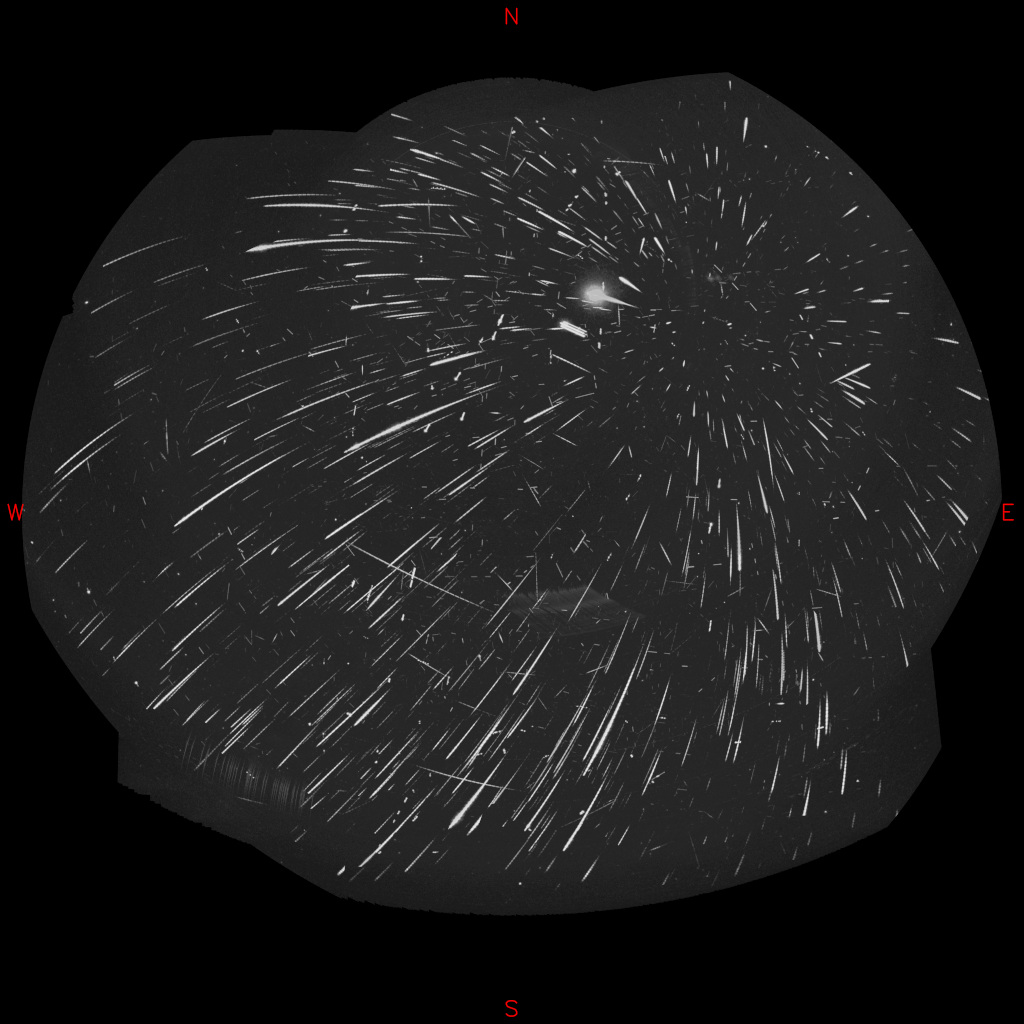
8月12日至13日的晚上,捷克天文台的四个专用流星监测摄像机拍摄的图像被对齐并组合在一起,形成了这张全天的全景图。那天晚上,总共有1706颗流星。由于这与2026年英仙座流星雨的高峰活动相吻合,所以大多数都是英仙座流星雨。它们数量庞大,很容易被发现。相当令人信服的是,英仙座流星雨的轨迹都可以追溯到天空右上方的一个辐射点,这是英仙座的一个区域。但是属于其他不太活跃的流星雨的流星也可以通过发现它们的辐射来揭示。例如,穿过英仙座流星雨的是来自天鹅座的流星雨,它的辐射位于天鹅座,被称为天鹅座Kappa Cygnids。在天空中,靠近水瓶座和太阳对面的反日冕复合体,也被认为是流星的弱来源。
查看原文解释
Recorded the night of August 12-13, images from four dedicated meteor-monitoring cameras at an astronomical observatory in Czechia were aligned and combined to create this all-night, all-sky view. On that night, the total count came to 1,706 meteors. And since that coincided with the peak activity of the 2026 Perseid Meteor Shower, most are perseids. Their overwhelming numbers make them easy to spot. Quite convincingly, perseid trails all trace back to a single radiant on the sky at the upper right, a region in the annual shower's eponymous constellation Perseus. But meteors belonging to other much less active showers can also revealed by finding their radiants too. For example, seen crossing the perseid trails are meteors from a shower whose radiant lies in Cygnus, known as Kappa Cygnids. The antihelion complex, a general region near Aquarius and opposite the Sun in the sky, is also identifiable as a weak source for meteors.
© Valašské Meziříčí Observatory