土星和海王星的逆行之舞
(原标题: The Retrograde Dance of Saturn and Neptune)
2026-05-06
浏览次数: 1903
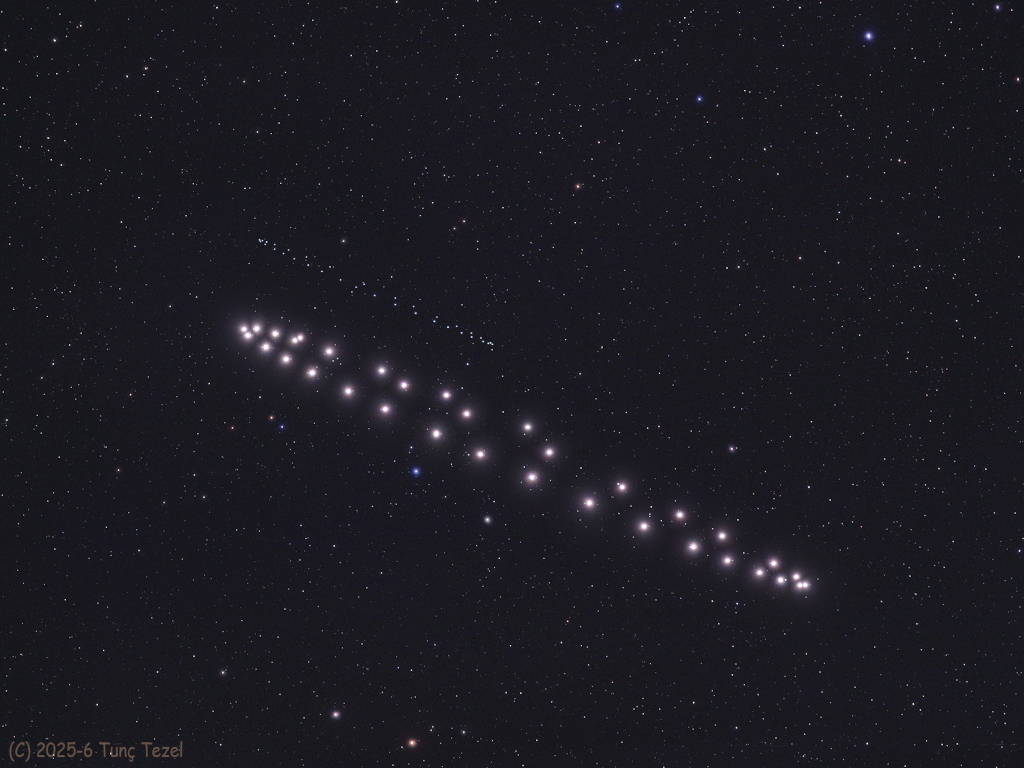
土星和海王星逆行意味着什么?这张图片是由从2025年5月到2026年2月拍摄的34个夜晚的图像合成而成,显示了土星(前景较亮)和海王星(背景较暗)。在那段时间里,这两颗行星表现出逆行运动,这意味着它们在天空中似乎是向后移动的。这种明显的反向运动发生在地球超过绕太阳运行的速度较慢的外行星时。想象太阳系是一条跑道。与外行星相比,地球沿着轨道内侧“跑”得更快。当地球接近,对准,然后“环绕”外行星时,从地球的角度来看,它们的位置从前面改变到后面。这种视角的变化是导致外行星在夜空中位置变化的原因。与今天的图像相对应的动画显示了土星和海王星在北方夜空中长达数月的舞蹈。土星从双鱼座进入水瓶座,而海王星则停留在双鱼座。这是自1989年土星和海王星最后一次相遇以来,它们在天空中距离最近的一次。
查看原文解释
What does it mean for Saturn and Neptune to be in retrograde? Featured is a composite of images taken over 34 nights from May 2025 to February 2026 tracing Saturn (brighter, foreground) and Neptune (dimmer, background). Over that time, the two planets exhibited retrograde motion, meaning they appeared to move backward in the sky. This apparent backwards motion occurs when Earth overtakes the slower outer planets as they orbit the Sun. Imagine the Solar System is a running track. Earth "runs" faster along the inside of the track compared to the outer planets. As Earth approaches, aligns, and then "laps" the outer planets, they change position from ahead to behind from the Earth's perspective. This perspective shift is what causes the outer planets to change position in the night sky. An animation corresponding to today’s image shows Saturn and Neptune’s months-long dance across the northern night sky. Saturn stepped from the Pisces constellation into Aquarius and back again while Neptune remained in Pisces. This is the closest Saturn and Neptune have been in the sky since their last conjunction in 1989.
© Tunç Tezel (TWAN) Text: Keighley Rockcliffe (NASA GSFC, UMBC CSST, CRESST II)