南冕分子云和枝形星团
(原标题: The Corona Australis Molecular Cloud and the Chandelier Cluster)
2026-07-22
浏览次数: 1694
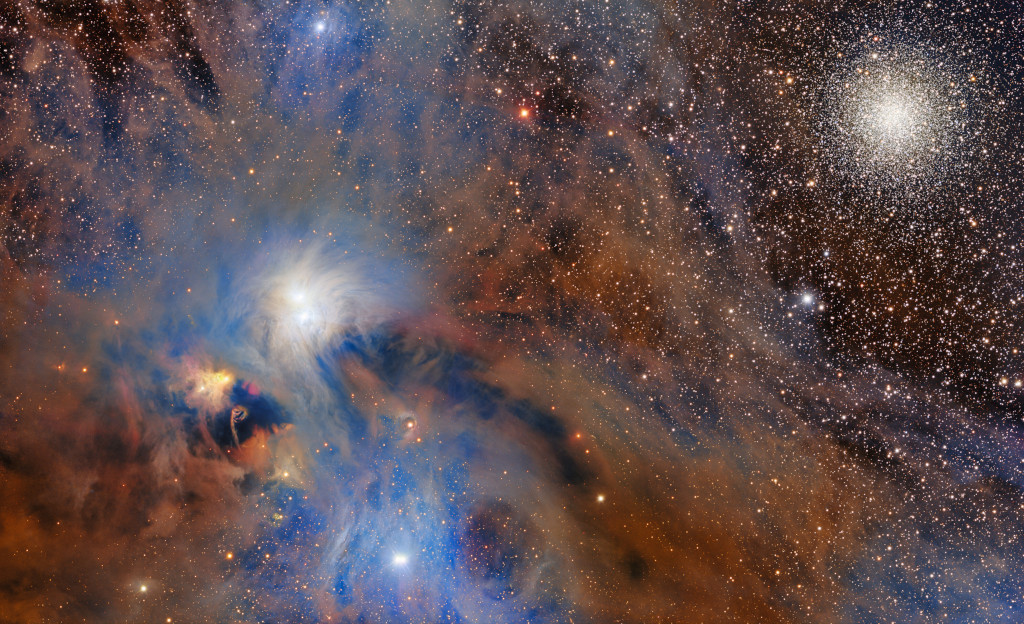
南冕(Corona Australis)闪耀着年轻而古老的天体珠宝。南冕云是今天图像左边的反射和发射星云的拼贴图。在430光年之外,这个星云是离地球最近的恒星形成区之一。它含有足够冷的气体(-260摄氏度或-440华氏度),可以坍缩成原恒星。新形成的恒星的光线被周围的物质反射后,在云中呈现出蓝色。南冕R双星系统的华尔兹搅动了星云ngc6729。年轻的那颗用紫外线电离附近的气体,使其发光。枝形星团(NGC 6723)悬挂在右上方,但实际上比它的恒星形成邻居要远数万光年。虽然NGC 6723经历了多个恒星形成时期,产生了一些更年轻的恒星,但枝形吊灯上闪烁着几乎和宇宙一样古老的恒星。
查看原文解释
The Southern Crown (Corona Australis) dazzles with young and ancient celestial jewels. The Corona Australis Cloud is a collage of reflection and emission nebulae on the left of today’s image. At 430 light years away, this cloud is one of the closest star-forming regions to Earth. It contains gas cool enough (-260 Celsius or -440 Fahrenheit) to collapse into protostars. Recently formed stars paint blue hues across the cloud as their light reflects off surrounding material. The waltz of the R Coronae Australis binary system stirs up the nebula NGC 6729. The younger of the pair ionizes nearby gas with its ultraviolet light, causing it to glow. The Chandelier Cluster (NGC 6723) dangles from the top right, but is actually tens of thousands of light years farther away than its apparent star-forming neighbor. While NGC 6723 experienced multiple periods of star formation creating slightly younger stars, the chandelier twinkles with stars almost as old as the universe.