火星上的龟岩
(原标题: Turtle Rock on Mars)
2026-07-21
浏览次数: 1743
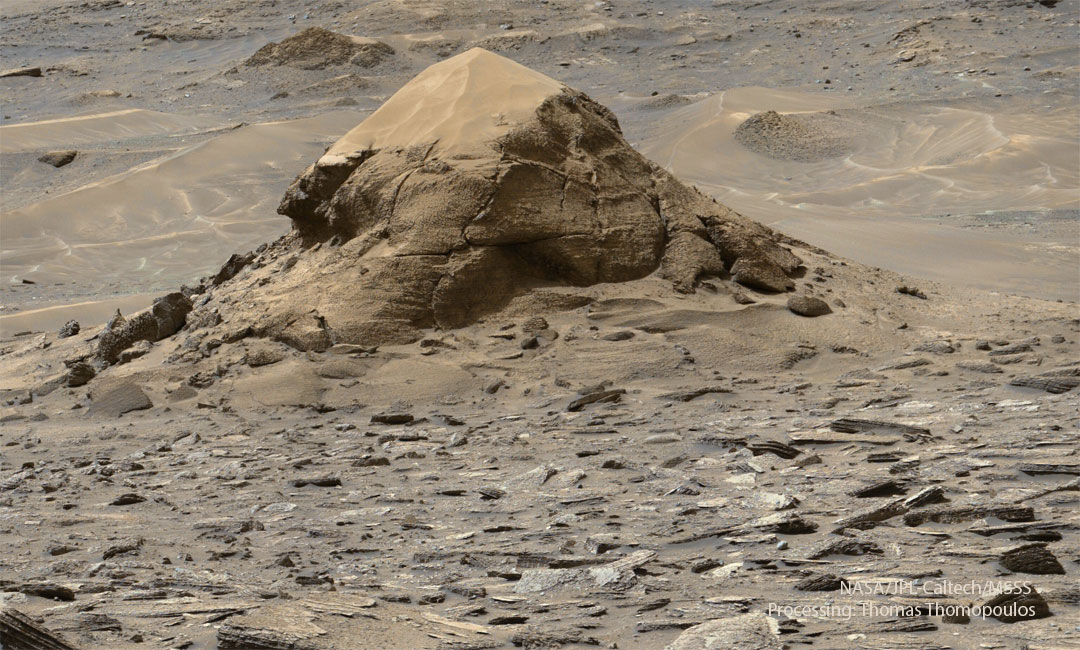
这是火星上的乌龟化石吗?否。虽然看起来像一只大型地球龟,但这是火星上的一层岩石露头,估计跨度约为15米,比地球上的乌龟大得多。上个月,美国宇航局的好奇号火星探测器在第4922天探索火星时,发现了这个不寻常的土丘,被称为米拉弗洛雷斯。小丘之所以能幸存下来,是因为它比周围的岩石更能抵抗侵蚀。最近的风把它的顶部覆盖上了橙色的火星沙。在顶部的外壳下面,可以看到许多层状的岩石,这可能表明有一个长期的历史,断断续续的风吹沙沉积,然后被地下水硬化。类似的被风侵蚀的层状地貌,如中国柴达木沙漠中的杨塘,在地球上也存在。好奇号和它的同伴毅力号继续调查火星的古代历史,并寻找原始生命的迹象。
查看原文解释
Is this a fossilized turtle on Mars? No. Although resembling a large Earth tortoise, this is a layered rock outcrop on Mars that is estimated to span about 15 meters, making it much larger than turtles on Earth. NASA’s robotic Curiosity rover came across this unusual mound, dubbed Miraflores, last month during its 4922nd Martian day exploring Mars. The small butte may survive because it was somehow more resistant to erosion than surrounding rock. More recent wind has now covered its top with orange Martian sand. Below the top shell, many layers of stratified rock are visible, possibly indicating a long history of intermittent wind-blown sand being deposited and then hardened by ground water. Similar wind-eroded layered landforms, such as yardangs in the Qaidam Desert of China, exist here on Earth. Curiosity and its companion rover Perseverance continue to investigate the ancient history of Mars as well as searching for signs of primeval life.