西月东海
(原标题: Western Moon, Eastern Sea)
2026-07-10
浏览次数: 1757
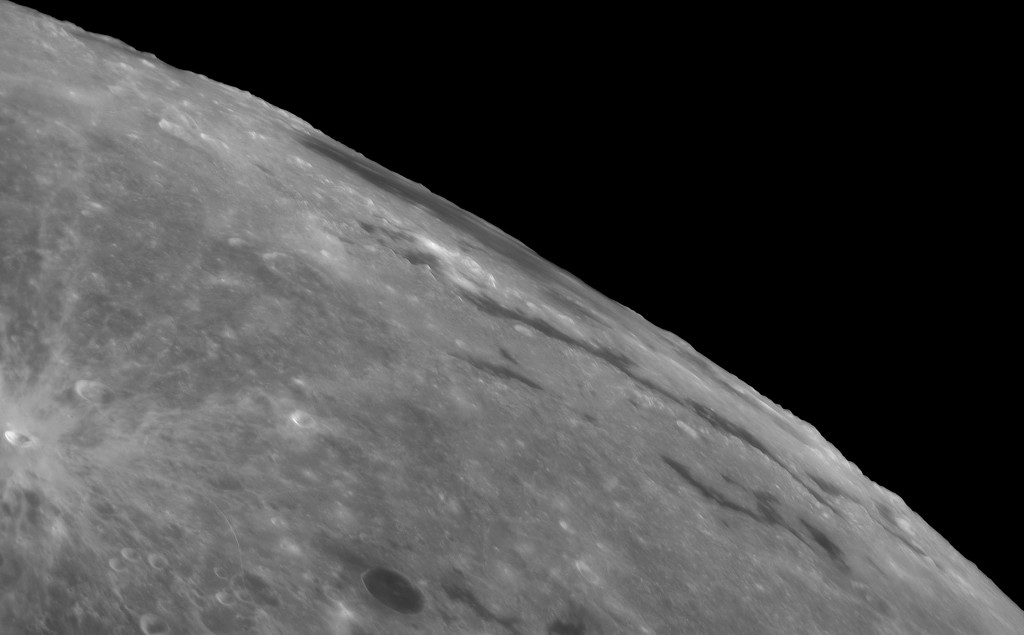
“东方海”(Mare Orientale)是拉丁语中“东海”的意思,是月球上最引人注目的大型特征之一。这是最年轻的大型月球撞击盆地从地球的角度很难看到。尽管如此,在7月7日有利的倾斜期间,或月球近侧的振动期间,在这张清晰的望远镜视图中,可以在右上方找到东海。在这幅图像中,巨大的月球母马被极度缩短,沿着月球的西部边缘延伸。撞击盆地是由30多亿年前一颗小行星撞击形成的,直径近1000公里,撞击盆地的同心圆形特征是月球地壳上的涟漪。但在从月球轨道上拍摄的更直接的图像中,它们更容易发现。那么,为什么东海在月球的西部边缘呢?“东方海”月球特征在1961年之前被命名。那时,在月球地图上标记东方和西方的惯例被颠倒了。
查看原文解释
The Mare Orientale, Latin for Eastern Sea, is one of the most striking large scale lunar features. The youngest of the large lunar impact basins it's very difficult to see from an earthbound perspective. Still, captured on July 7 during a period of favorable tilt, or libration of the lunar nearside, the Eastern Sea can be found at the upper right in this sharp telescopic view. In the image, the large lunar mare is extremely foreshortened and stretches along the Moon's western edge. Formed by the impact of an asteroid over 3 billion years ago and nearly 1000 kilometers across, the impact basin's concentric circular features are ripples in the lunar crust. But they are a little easier to spot in more direct images of the region taken from lunar orbit. So why is the Eastern Sea at the Moon's western edge? The Mare Orientale lunar feature was named before 1961. That's when the convention labeling east and west on lunar maps was reversed.
© The Mare Orientale