火星探路者
(原标题: Pathfinder on Mars)
2026-07-04
浏览次数: 1880
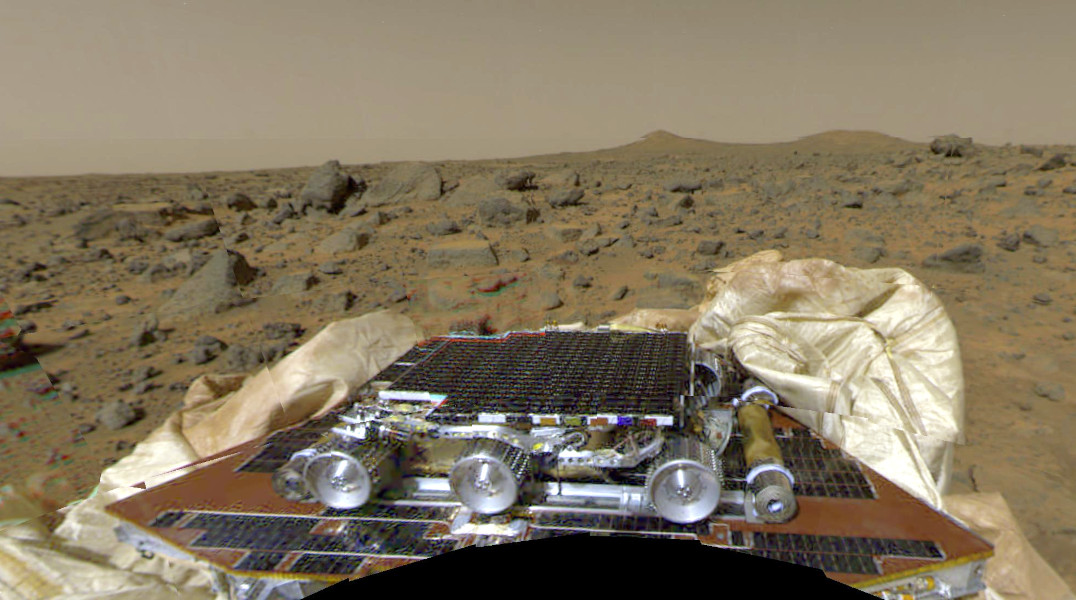
1997年7月4日,在太平洋夏令时上午10点07分,火星探路者号飞船利用自己的烟火、降落伞和气囊,像一个巨大的沙滩球一样弹跳了至少15次,最终降落在火星表面。在其当时新颖的安全气囊辅助着陆序列完成后,探路者将这幅彩色马赛克传送给了地球上的任务操作员。在另一个世界的场景中,火星旅居者(Mars Sojourner)机器人探测器在前景中可见,它蜷缩在展开的探路者(Pathfinder)上。大约一只大型家猫大小,六轮太阳能驱动的“旅居者”成为第一个成功的火星探测器。围绕着探路者的是泄气的安全气囊和阿瑞斯山谷漫滩布满岩石的地形。远处火星的山丘映衬着灰蒙蒙的褐色天空。探路者着陆器后来被重新命名为卡尔·萨根纪念站。
查看原文解释
On July 4th, 1997, using its own array of fireworks, a parachute, and a cocoon of airbags, the Mars Pathfinder spacecraft bounced like a giant beach ball at least 15 times before it came to rest on the surface of Mars at 10:07 AM Pacific Daylight Time. After its then novel airbag-assisted landing sequence was completed, Pathfinder transmitted this color mosaic to mission operators on Earth. In the scene from another world, the Mars Sojourner robot rover is visible in the foreground, crouched on top of the unfolded Pathfinder. About the size of a large house cat, the six-wheeled, solar-powered Sojourner became the first successful Martian rover. Surrounding Pathfinder are deflated airbags and the rock-strewn terrain of the Ares Vallis floodplain. In the distance Martian hills appear against a dusty brownish sky. The Pathfinder lander was subsequently renamed the Carl Sagan Memorial Station.