彗星R3泛星和猎户座星云的合相
(原标题: The Conjunction of Comet R3 PanSTARRS and the Orion Nebula)
2026-05-12
浏览次数: 1805
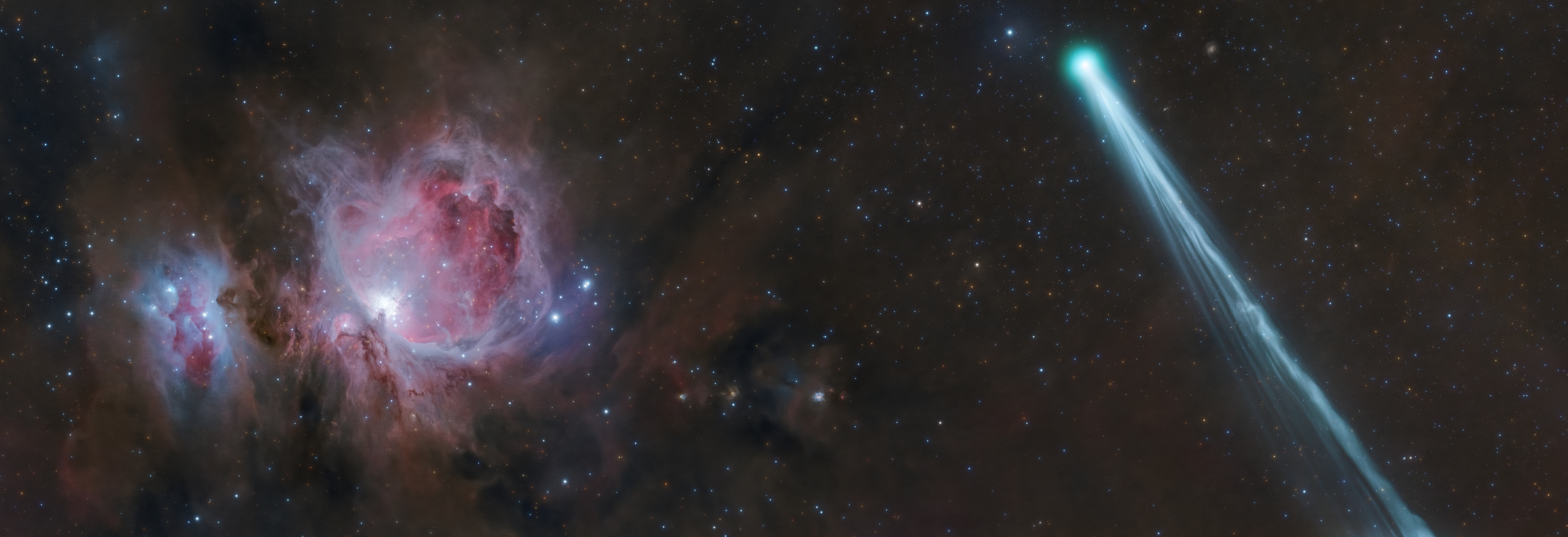
今天的合成图像有一些旧的,一些新的,一些借来的,还有一些蓝色的!图像右侧的彗星R3 PanSTARRS可能起源于奥尔特云,这意味着它是数十亿年前古老的太阳系遗迹。它明亮的延伸的离子尾巴发出蓝色的光,因为从彗星核心逸出的气体被阳光电离。天文学家对彗星着迷的原因有很多:彗星的成分是未被接触过的时间胶囊,里面包含着太阳系行星的组成部分;彗星可能给年轻的地球带来了水;彗星尾巴的行为揭示了太阳风和辐射的相互作用。背景马赛克,以猎户座星云(M42)为特色,拍摄了两个晚上的观测,第三个晚上捕获了彗星。猎户座星云是离我们最近的恒星托儿所,大约有200万年的历史,是我们(相对)新的东西!现在,在距离地球约1.275亿公里的地方,我们向借来的彗星R3 PanSTARRS挥手告别,它将离开太阳系。成长画廊:2026年的彗星R3
查看原文解释
Today’s composite image features something old, something new, something borrowed, and something blue! Comet R3 PanSTARRS, streaking across the right of the image, likely originated from the Oort Cloud, meaning it is an old Solar System relic from billions of years ago. It’s bright extended ion tail glows blue as the gas escaping the comet’s core is ionized by sunlight. Astronomers are fascinated by comets for all sorts of reasons: comet compositions are untouched time capsules containing the building blocks of Solar System planets; comets may have delivered water to the young Earth; the behavior of cometary tails shed light on solar wind and radiation interactions. The background mosaic, featuring the Orion Nebula (M42), was taken over two nights of observation with the comet captured on the third night. The Orion Nebula is our nearest stellar nursery and, at about 2 million years old, is our something (relatively) new! Now at around 127.5 million kilometers from Earth, we wave goodbye to the borrowed Comet R3 PanSTARRS as it leaves the Solar System. Growing Gallery: Comet R3 in 2026
© Julien De Winter, Sascha Ebeler Text: Keighley Rockcliffe (NASA GSFC, UMBC CSST, CRESST II)