NanoSail-D2
2026-01-02
浏览次数: 15426
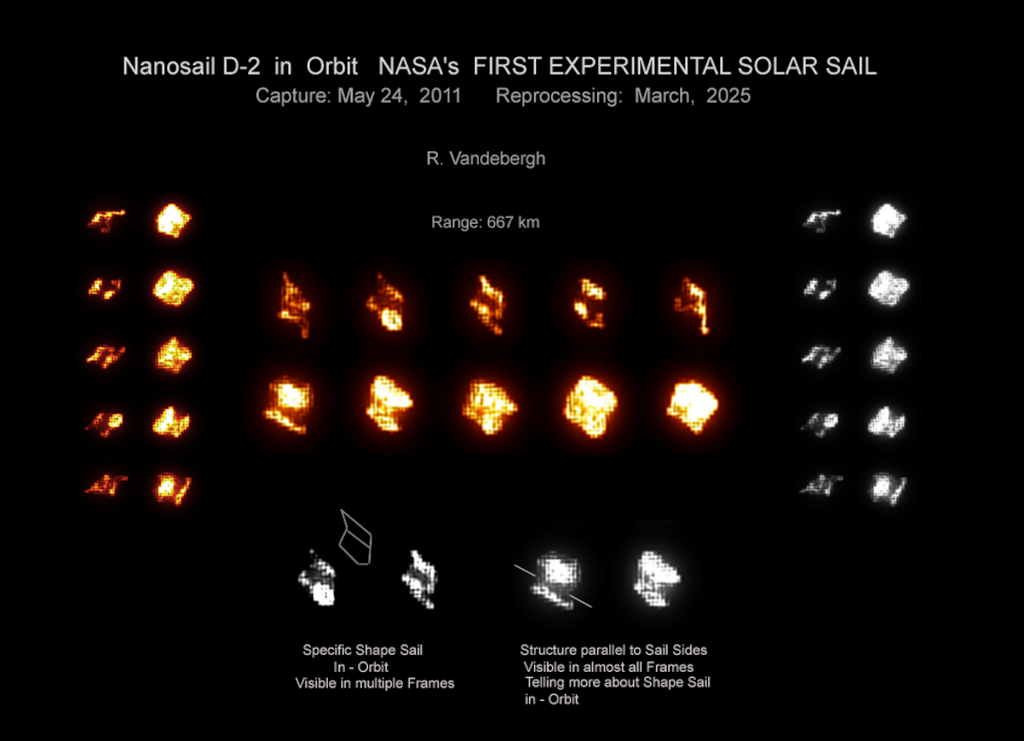
2011年1月20日,美国宇航局的纳米帆- d2展开了一个非常薄且反射能力很强的10平方米的帆,成为第一个在近地轨道上运行的太阳帆航天器。400年前,天文学家约翰内斯·开普勒(Johannes Kepler)观察到太阳风吹来的彗星尾巴,提出了在太空中航行的想法,这通常被认为是科幻小说里的情节。但现代太阳帆航天器的设计,如NanoSail-D2,日本的星际飞船IKAROS,或行星协会的光帆A,依靠太阳本身微小但持续的压力来推进。当纳米帆- d2环绕地球运行时,它的太阳帆在阳光下闪闪发光,它的太阳帆周期性地亮起来,肉眼可见。这些非常详细的图像是通过用小型望远镜手动跟踪轨道上的太阳帆航天器拍摄的。
查看原文解释
In 2011, on January 20, NASA's NanoSail-D2 unfurled a very thin and very reflective 10 square meter sail becoming the first solar sail spacecraft in low Earth orbit. Often considered the stuff of science fiction, sailing through space was suggested 400 years ago by astronomer Johannes Kepler, who had observed comet tails blown by the solar wind. But modern solar sail spacecraft designs, like NanoSail-D2, Japan's interplanetary spacecraft IKAROS, or the Planetary Society's Lightsail A, rely on the small but continuous pressure from sunlight itself for thrust. Glinting in the sunlight as it circled planet Earth, NanoSail-D2's solar sail was periodically bright and visible to the eye. These remarkably detailed images were captured by manually tracking the orbiting solar sail spacecraft with a small telescope.
© Ralf Vandebergh